
Understanding Mississippi Inmate Release
Release in Mississippi describes departure from one custody setting. It does not always mean the sentence has ended. A county jail may release someone on bond, after time served, after dismissal, or under a court order. The same jail may transfer a person to an MDOC regional facility, another county, federal custody, or immigration custody. A name that vanishes from a live jail roster can reflect any of those events. The local booking and release record, not the empty roster result by itself, identifies what occurred.
State custody uses more precise terms. The Mississippi Department of Corrections, or MDOC, distinguishes parole, Earned Release Supervision, tentative release, maximum discharge, probation-related exits, and conditional medical release. Parole is conditional release approved by the Mississippi State Parole Board. ERS is community placement under MDOC control, so the person keeps inmate status until sentence expiration. A tentative date is an estimate after credits and adjustments. Maximum discharge reflects the expected endpoint without early-release allowances.
| Event | What It Means | Primary Record Route |
|---|---|---|
| County release | The person left a local jail after bond, court action, or completion of local custody. | County facility or sheriff release record |
| Parole | The Parole Board approved conditional release from a state sentence. | MDOC parolee search and board records |
| ERS | The person left a prison setting but remains an inmate under MDOC jurisdiction. | MDOC inmate search and Records |
| Sentence expiration | The MDOC exit category records expiration rather than an early community placement. | MDOC record or nonexempt discharge document |
| Federal or ICE release | A separate sovereign reports departure from its custody. | BOP or ICE locator |
Mississippi Release Record Fields
A useful Mississippi release record ties the person to an event, an authority, and a date. County forms differ, but the key questions stay narrow: Which facility held the person? What was the release or exit type? Did another agency receive custody? Did supervision follow? MDOC detail records add sentence data that a county booking record may not contain. They can show a photograph, MDOC number, entry date, location, unit, location-change date, sentence count, total term, conviction county, sentence date, and Tentative Release Date.
Identity fields should be compared before status is accepted. Similar names and spelling differences can produce a wrong match or no match. An MDOC number is the strongest public-search key when known. At the county layer, a booking number or case number can serve the same role. A transfer destination is also vital because transfer is not community release. The responsible authority after the event may hold the better record.
| Field | What It Establishes |
|---|---|
| Name and identifier | Connects the event to the correct person through an MDOC, booking, or case number. |
| Release or location-change date | Marks an event date, though it may be transfer or community placement. |
| Release or exit type | Distinguishes parole, probation, ERS, expiration, bond, or another category. |
| Releasing facility | Identifies which office should verify the event or provide the local record. |
| Destination or location | Shows whether custody shifted to another facility, county, or supervision unit. |
| Tentative Release Date | Reports an anticipated MDOC date, not a promise of actual release. |
| Supervision data | May identify a county, officer, Flat Time Date, or active community status. |
MDOC does not publish how long fully discharged records remain online. Current research also did not verify a live official detail with a literal Released or Discharged label. A missing result therefore cannot prove that no record exists.
The MDOC inmate search form accepts a first and last name or an MDOC ID number.
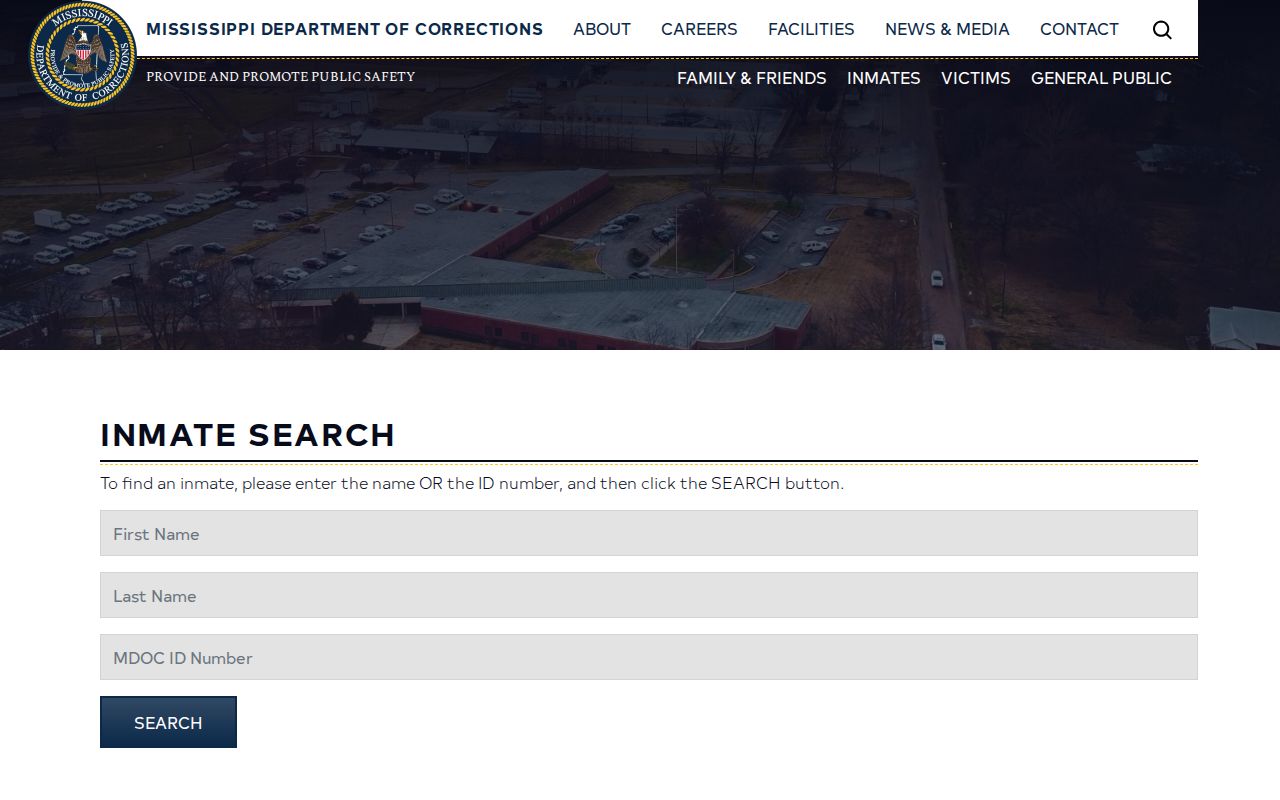
The compact form makes identifier matching essential before interpreting location or a tentative date.
Request Mississippi Release Records
Record ownership decides where a request goes. For a county jail event, ask the facility or sheriff that created the booking and release entry. County procedures, fees, and online access vary, so the Mississippi County Directory is the route to the correct local source. Ask for records sufficient to show the custody-release date, event type, releasing facility, destination or transfer authority, and any booking identifier. Juvenile, sealed, expunged, victim, investigative, or court-protected material may be restricted.
For a state sentence, MDOC separates sentence-time questions from broader public-record requests. MDOC Records handles sentence time, jail credit, eligibility, and release or discharge verification. The Legal Division processes written requests for nonexempt agency records. A request should identify the person and MDOC number, describe the records, include contact details, and be signed. Neutral wording can seek the custody-release date, release or exit type, sentence-discharge status, and any nonexempt certificate or final time computation.
- Identify whether the event belonged to a county jail, MDOC, a federal facility, ICE, or a court.
- Gather the full name and the strongest known identifier, such as an MDOC, booking, register, A-number, or case number.
- Ask for the specific event fields and date range instead of requesting an undefined complete file.
- For MDOC public records, submit the written request to its Public Records Officer and wait for a cost estimate if one applies.
- Compare the response with court disposition and supervision data when release does not mean complete discharge.
Under the Mississippi Public Records Act, nonexempt records are public property subject to reasonable procedures. If an agency has no procedure, Section 25-61-5 supplies a one-working-day access rule after written request. Denials must be written and cite an exemption. Section 25-61-7 allows actual costs for search, review, duplication, and mailing.
MDOC says it responds within seven working days. If a request is approved, it estimates the charge and ordinarily produces the material within fourteen working days after request and payment unless more time is needed. Mechanically reproduced pages cost $0.15 each for ordinary requesters. Work beyond one hour may be billed at the lowest qualified employee rate, and advance payment may be required.
The MDOC public-record request portal provides the online entry point for a formal state corrections request.
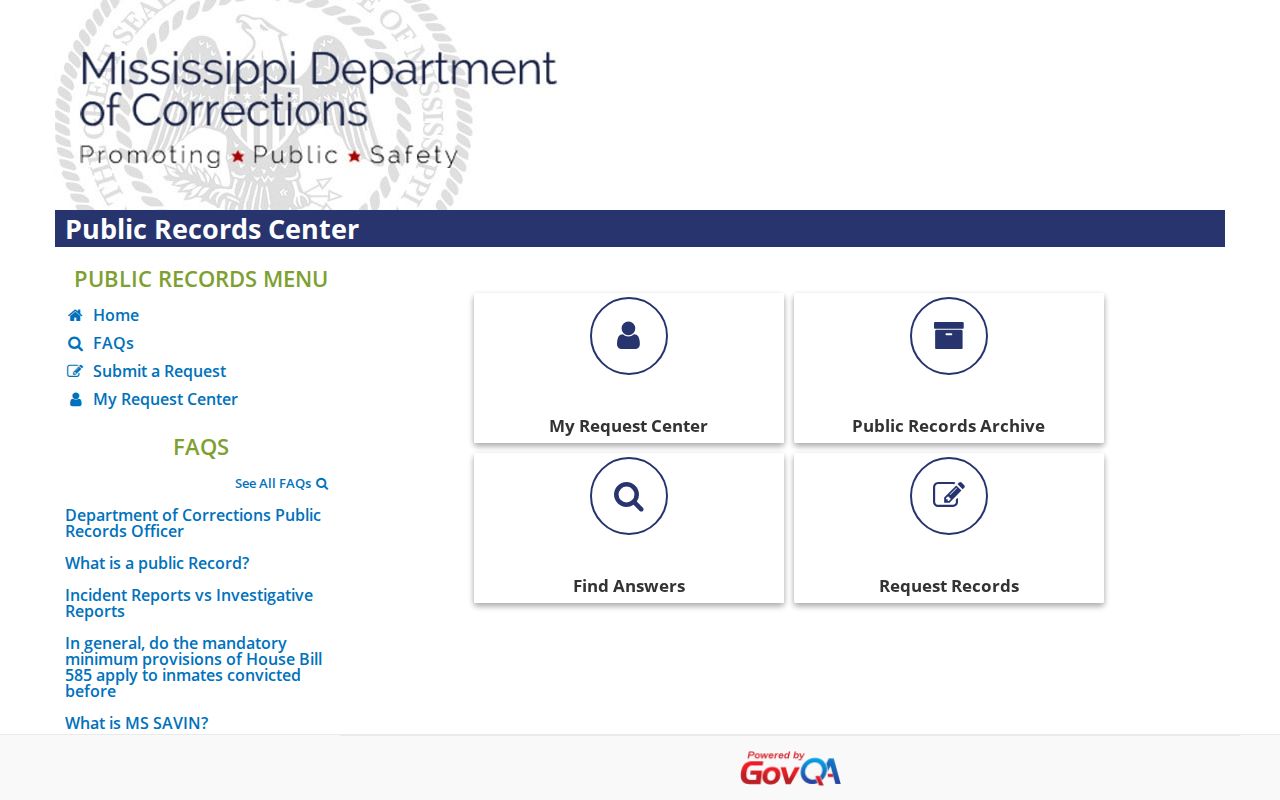
A portal request should still name the event and fields needed so staff can identify responsive records.
Note: Medical records follow a separate authorization or court-order process and should not be folded into an ordinary release-record request.
Mississippi Prison Release Logistics
Mississippi has specific release-day procedures but no verified universal gate-money grant. MDOC says release processing may take 30 to 45 days. A case manager tells the inmate the release date, asks about travel plans, and verifies those plans. If bus travel is requested, MDOC can buy a ticket to an in-state destination or the nearest city. It does not purchase out-of-state travel. The person must receive a discharge certificate before release and should keep in touch with the case manager while arrangements are completed.
Account funds are supplied after release, but not as cash. On transfer, those funds follow the inmate. That is different from a fixed state-funded gratuity, which current official research did not verify. The distinction keeps planning tied to documented MDOC practice. The certificate is also not displayed in the public inmate search. When documentary proof is needed, MDOC Records or the Legal Division is the proper route for any nonexempt certificate and final time computation.
The MDOC release and discharge information is the official source for processing, travel, certificates, and inmate-account funds.

Its details show why an online date and a completed release process are related but not identical facts.
Mississippi Release and Supervision Totals
Mississippi’s supervised population is much larger than its prison population. MDOC’s August 2026 fact sheet, measured on August 3, reported 43,323 parolees and probationers, 21,823 inmates, and 65,146 active offenders in all. The supervised count included 8,735 parolees, 152 people classified as TVC parole, 34,328 probationers, and 108 classified as TVC probation. These are dated agency totals, not a live count.
The FY2023 annual report classified 5,823 releases by exit type. Parole accounted for 2,833, probation for 1,765, sentence expiration for 592, and ERS for 437. Smaller categories included deaths, other exits, house arrest, medical release, and conditional release. Only 592 were labeled sentence expiration. The release total therefore cannot be read as a count of people who ended all state control that year. It records MDOC exit categories, many of which moved a person into supervision.
Note: July-to-August figures show a one-month change only and do not establish a long-term Mississippi release trend.
Mississippi Release Records Law
The Mississippi Public Records Act of 1983 spans Miss. Code Ann. Sections 25-61-1 through 25-61-19. It provides the main executive-branch access framework, while other laws and court rules can restrict particular files. Section 25-61-12 exempts investigative reports but treats law-enforcement incident reports as public subject to protected details. Victim-identifying data can be withheld. MDOC and Parole Board victim information, impact statements, and support letters also receive protection.
No enacted Mississippi law specific to commercial mugshot publication or paid removal was verified as of August 12, 2026. Failed bills are not law. A booking photograph must be assessed record by record under the Public Records Act, agency procedure, and any other exemption. It is inaccurate to promise either automatic disclosure or a Mississippi-specific removal right. Judicial records follow court rules and access policies rather than the exact executive-agency process.
Access point: A written denial should name the exemption. Section 25-61-13 permits a complaint to the Mississippi Ethics Commission.
The official Public Records Act resource presents the state access rules and exemptions that shape release-record requests.
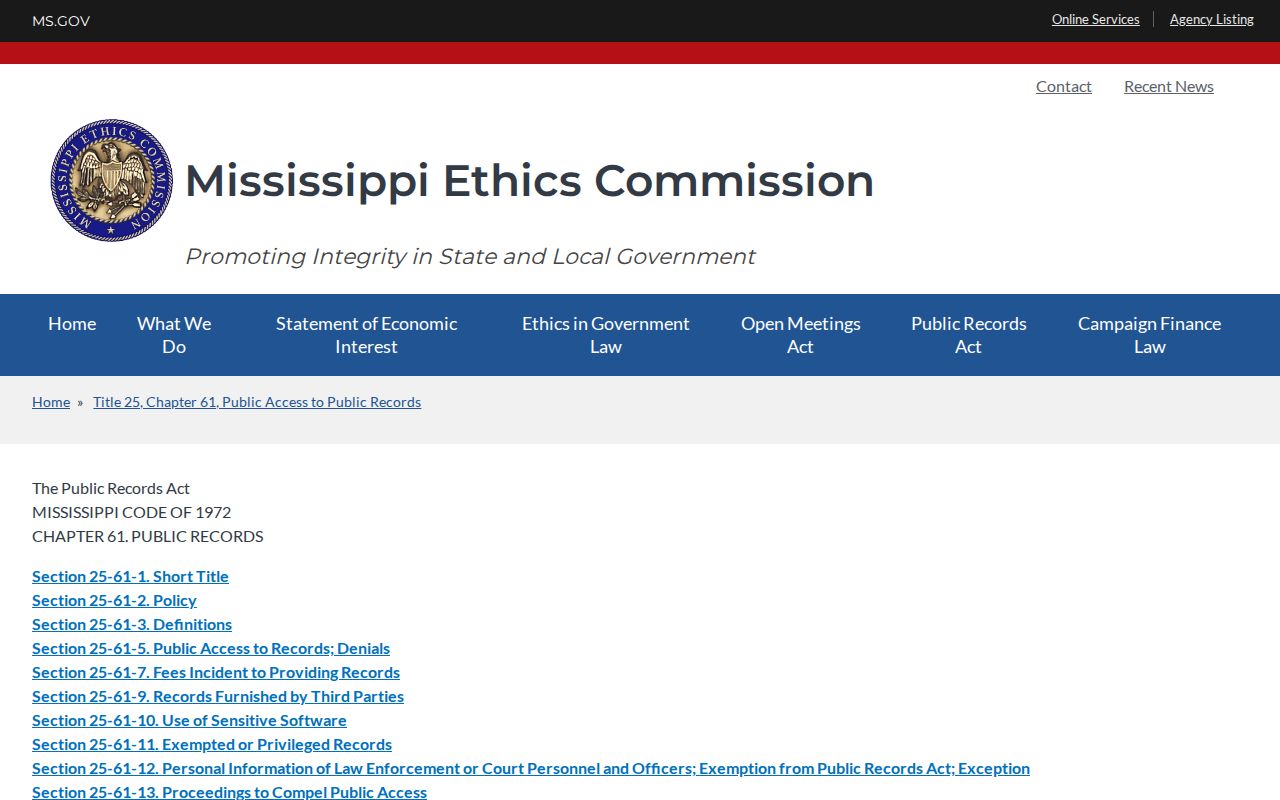
That statutory framework explains why an agency may release part of a record while withholding protected portions.
Find Mississippi Released Inmates
The best statewide search begins with custody ownership. A state prisoner is checked in the MDOC inmate search by MDOC number or name. Read the Location, Unit, Location Change Date, sentence data, and Tentative Release Date. Then check the parolee search when parole is possible. If the result names ERS, physical prison release may have occurred while MDOC inmate status and jurisdiction continue. If neither public tool resolves discharge, ask MDOC Records for documentary confirmation.
A county detainee follows a different path. Locate the county or regional facility, check any available current and release records, then request the booking-release event from the office that created it. A court disposition can confirm bond, dismissal, sentence, probation, revocation, or another order, though it may not state the hour physical custody ended. Federal and immigration cases must be checked in their own locators.
- Confirm the last known facility and decide whether the authority was county, MDOC, federal, tribal, or immigration.
- Search the matching official locator with the strongest identifier and compare all returned identity fields.
- Read the status, location, event date, release date, and supervision fields as separate facts.
- Check the sentencing court or supervision system when community release may have followed custody.
- Request the event record from the owning agency when live tools are blank, unclear, or incomplete.
Roster limit: A released person usually leaves a live jail roster. An empty search result does not prove community release or complete discharge.
The complete state-prison workflow and field interpretation continue in the MDOC offender search resource.
Mississippi ERS Release Status
Earned Release Supervision creates one of Mississippi’s most important status distinctions. An MDOC result may list South Mississippi Earned Release Supervision or Central Mississippi Earned Release Supervision as the Location and still show a future Tentative Release Date. MDOC explains that a person on ERS remains an inmate under state jurisdiction through sentence expiration. The person may be outside a prison building, but the sentence has not reached full discharge.
ERS eligibility and actual placement are also distinct. Near eligibility, MDOC requests a proposed Mississippi residence. A probation or parole agent inspects it for approval. Conduct, programming, severity, opposition, time served, and other record factors may be reviewed. Earned time can be forfeited for serious violations. Revocation can return the person to confinement, and time on ERS does not reduce the remaining term after revocation under the cited framework.
An official South Mississippi ERS detail shows a community-supervision location alongside a future tentative date.
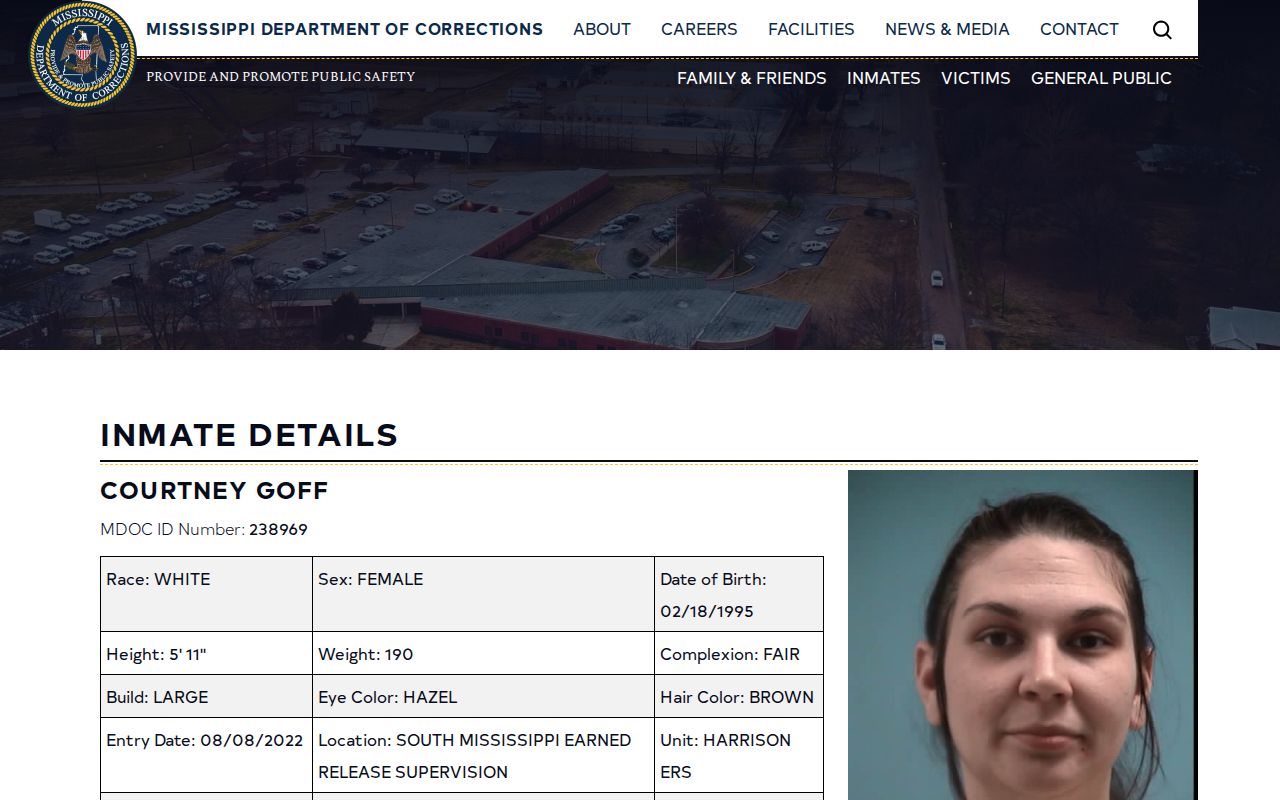
The result is concrete evidence that leaving institutional confinement does not equal sentence discharge in Mississippi.
- Tentative release
- An anticipated date after applicable credits and adjustments.
- ERS
- Conditional community placement while inmate status and MDOC control continue.
- Parole
- Conditional release granted and revocable by the Mississippi State Parole Board.
- Discharge
- Completion of the identified sentence process, which should be verified through the responsible record owner.
Mississippi Release Records by County
Mississippi’s 82 counties do not publish release data in one uniform way. Some custody is local. Some is regional. Several regional facilities serve more than one county, so the county of arrest, the county of conviction, and the physical facility county may differ. Attala County’s former jail is closed, with current detention routed through Leake County Correctional Facility. A statewide search must therefore test both the physical releasing facility and the authority that owned the sentence or hold.
Supervision access also varies by status. The MDOC parolee search accepts a first name, last name, MDOC number, city, or county and can return the assigned county, officer, photograph, and Flat Time Date. No equivalent public statewide probationer search was verified. Probation, house arrest, or another community-corrections status is instead checked through the MDOC office in the assigned county and the sentencing court.
The MDOC parolee search supplies a statewide county and officer route for current parole verification.
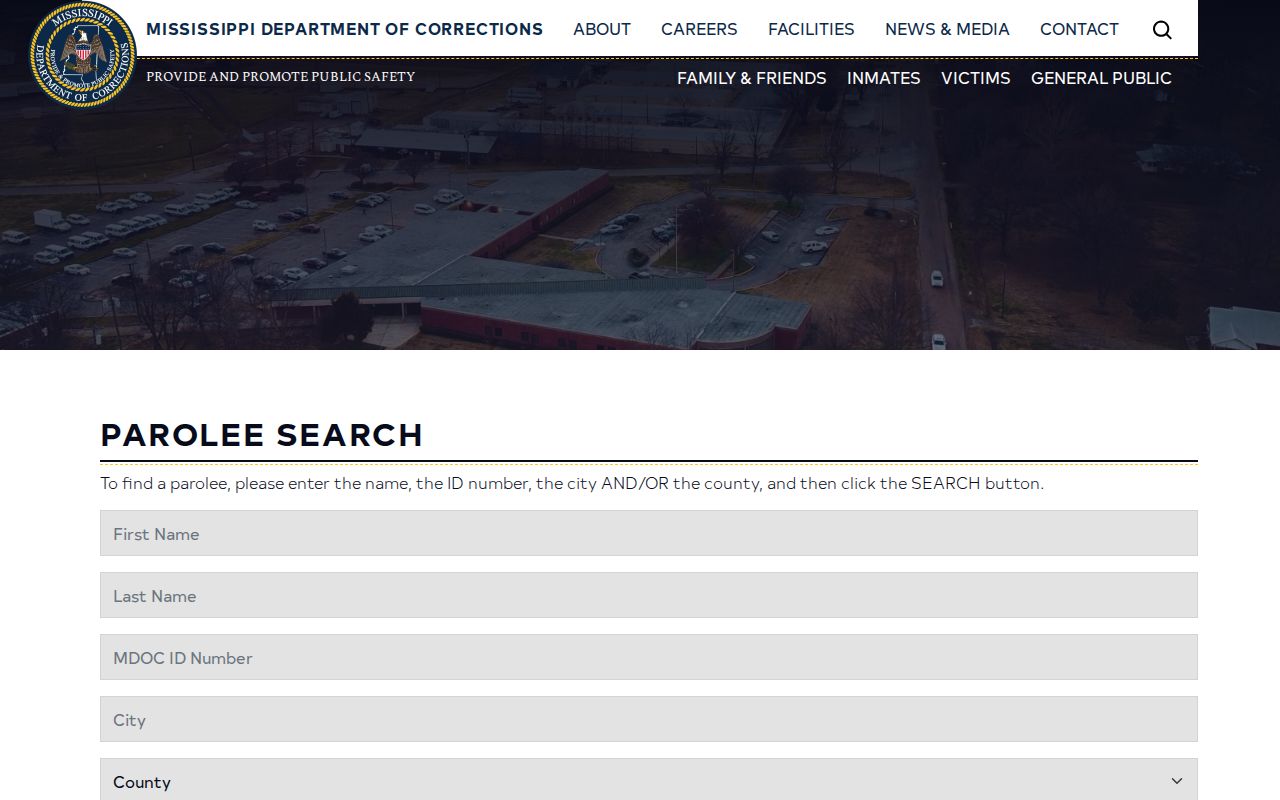
Its scope is current parole, not every probation case or a permanent archive of supervision that ended.
Note: No result can also reflect spelling, ERS, another authority, ended supervision, or a historical period outside public coverage.
Mississippi Release Alerts and SAVIN
The Office of Mississippi SAVIN, meaning Statewide Automated Victim Information and Notification, tracks MDOC offenders and people held by participating county jails. Participation is a real limit. Coverage and update speed can differ across counties because alerts rely on each source agency’s electronic data. VINELink supports a named-person status check and registration for available transfer, release, escape or abscond-supervision, and return-to-custody notices.
A county registration may follow a transfer into MDOC through the Registration Link. That feature can reduce the need to register again after a custody move, and rapid moves can produce several alerts. A VINE release notice only means the participating source reported that custody event. It does not prove that parole, probation, an MDOC sentence, a federal term, or another hold ended. VINELink is not a historical discharge archive or warrant database.
The Mississippi SAVIN overview describes the state and participating-county coverage used for release notifications.
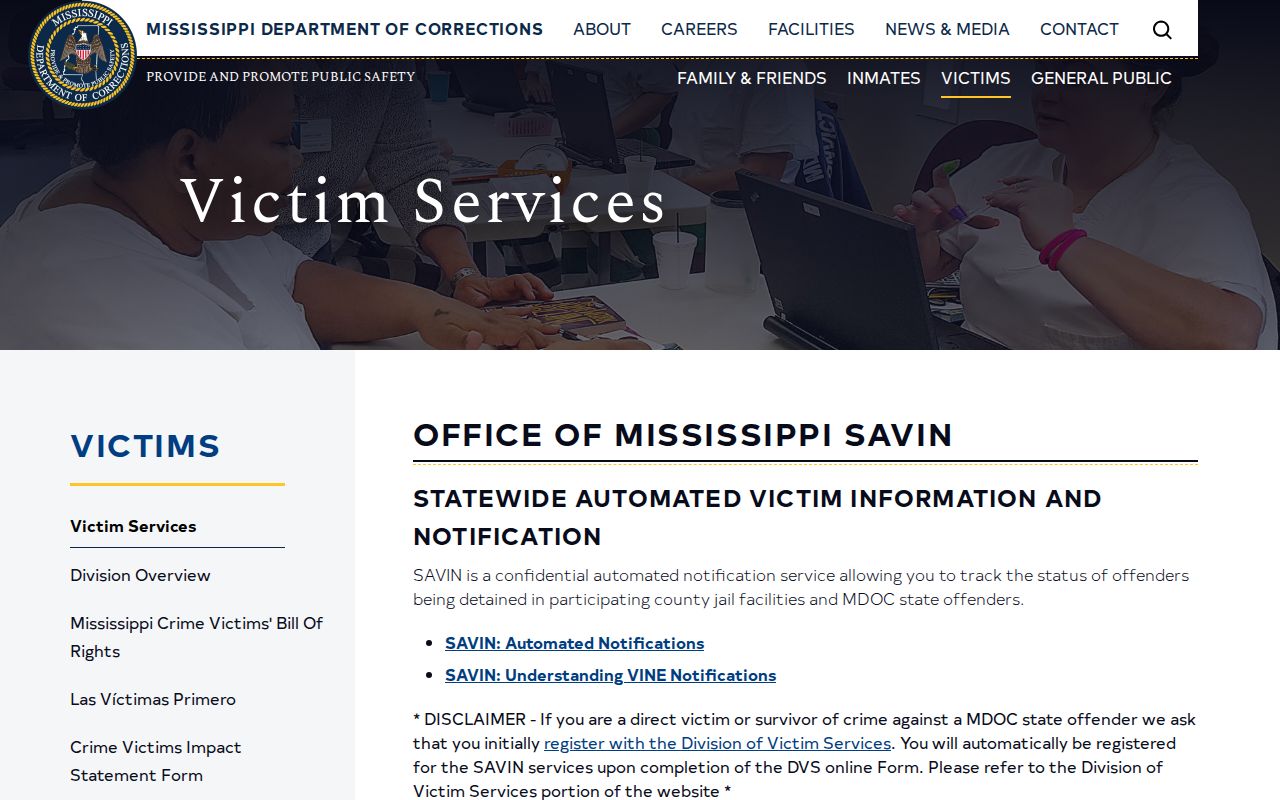
The statewide label should not be mistaken for equal historical coverage in every county facility.
Mississippi Federal Release Checks
Federal Bureau of Prisons records are separate from MDOC. The BOP locator accepts a register number in five-digit, hyphen, three-digit format or a name with optional age, race, and sex. Results can show the name, register number, age, race, sex, release date, and location. “Released” or “Not in BOP Custody” means the person is no longer held by BOP. It does not rule out federal supervision or custody by a different authority. BOP says its public data generally cover federal inmates released after 1982 and update daily.
The official BOP locator is the correct search for a federal release rather than the MDOC inmate tool.
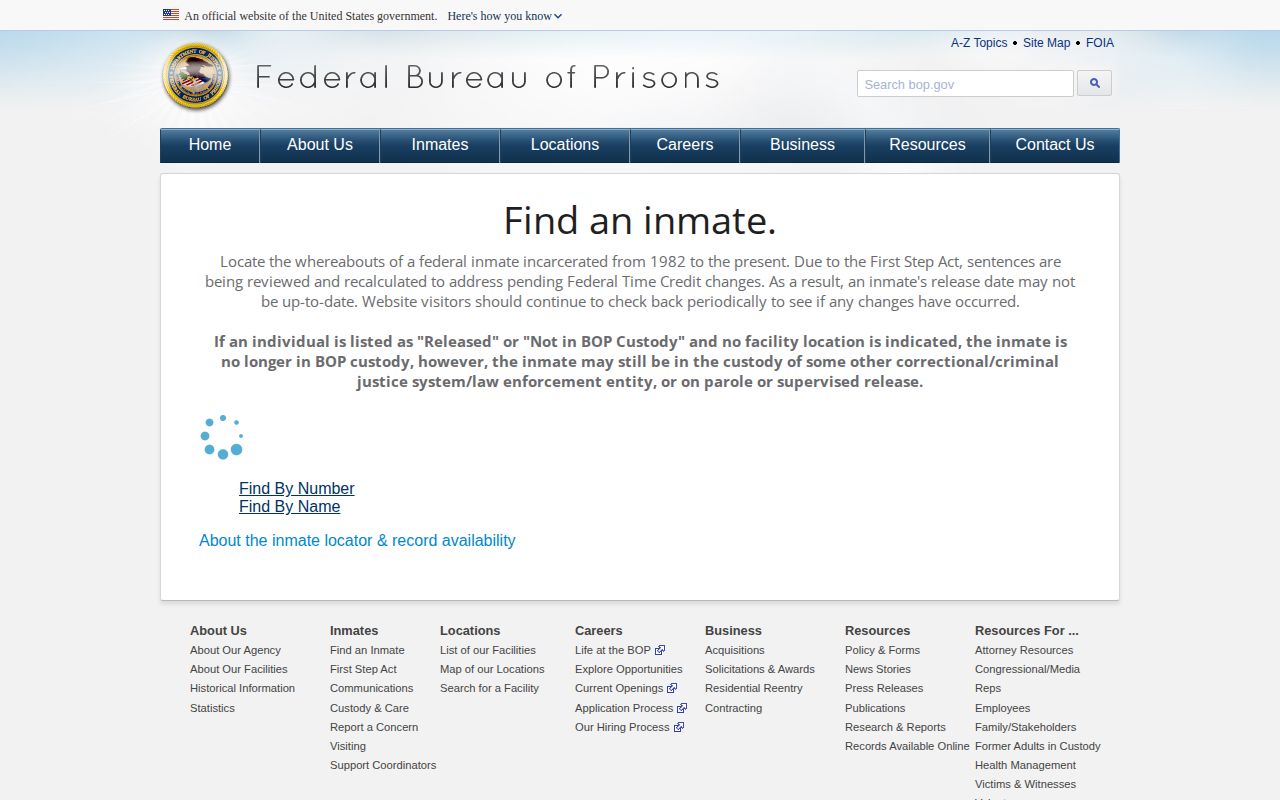
A projected federal release date may change, so the status and location fields should be read with the date.
Mississippi Immigration Release Checks
Immigration custody has another route. The ICE locator accepts a nine-digit A-number and country of birth, or an exact name with country and birth date. ICE says it can identify people currently detained or released from ICE custody within the prior 60 days, along with certain people held by CBP more than 48 hours. It excludes persons under 18. A county release followed by an ICE hold is therefore a transfer of custody, not proof of community release.
The official ICE locator guidance defines the identifiers, recent-release scope, and limits of the immigration custody search.
ICE results address immigration custody only and do not settle a county, state, or federal sentence record.
Mississippi Court Release Records
Mississippi Electronic Courts and PAMEC can add the judicial record. Access varies by court and district, and some documents are restricted. A court file may confirm disposition, sentence, probation, revocation, or a discharge-related order. It may not establish the exact physical release date. When a matter is unavailable online, the clerk that owns the case is the source.
The Mississippi court portal registration page is the public-access entry for participating electronic courts.
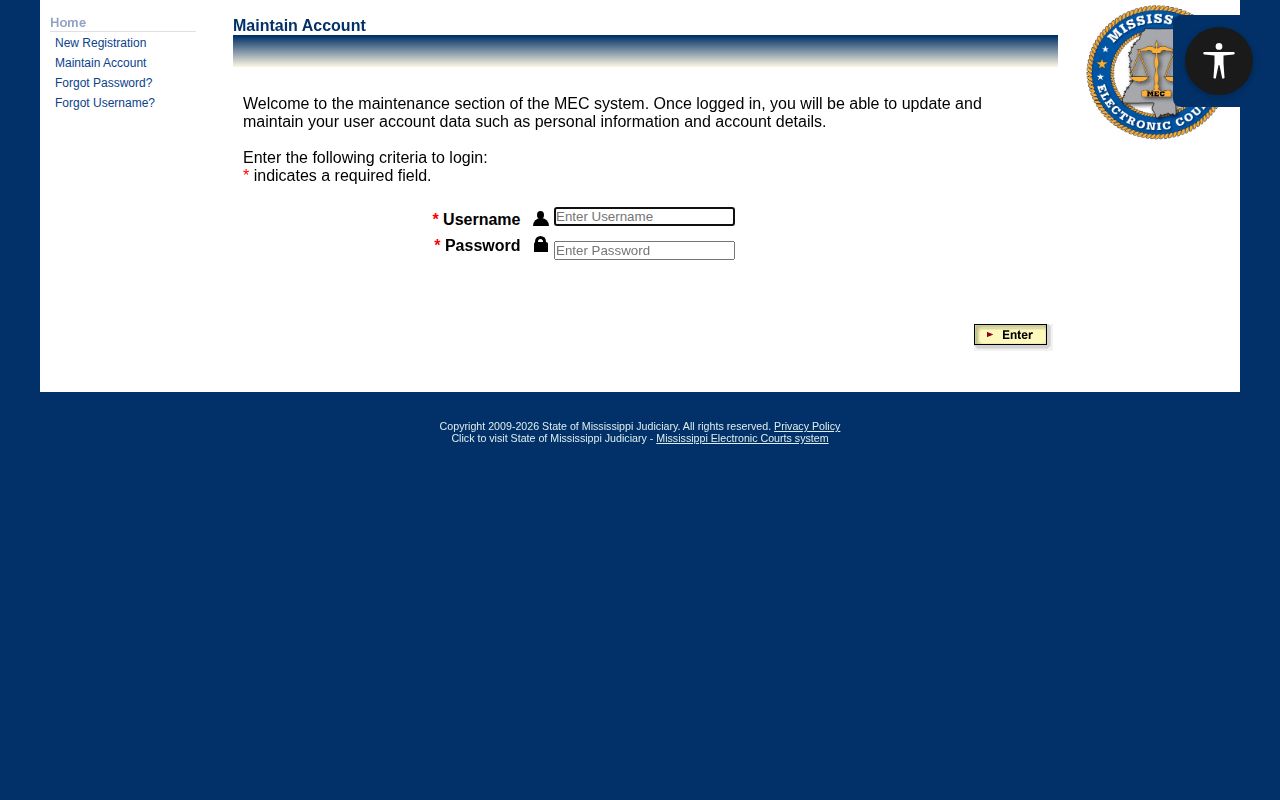
The registration screen reflects a court-specific system, not one free statewide criminal-case index.
Compare Mississippi Release Systems
Each public system answers a limited question. A live roster asks who is held now. A county release record asks what local custody event occurred. MDOC inmate and parolee searches address state jurisdiction and supervision. SAVIN provides specific-person status and alerts where agencies participate. Federal and immigration locators cover their own custody. Courts document judicial action. No single blank result proves discharge from all of them.
| System | Best Use | Key Limit |
|---|---|---|
| County jail roster | Confirm current local custody | A released or transferred name usually leaves the roster |
| County release record | Confirm local event date, type, and destination | Procedure and published fields vary by county |
| MDOC inmate search | Read state location, sentence, and tentative date | ERS can appear as inmate status in the community |
| MDOC parolee search | Verify current parole, county, and officer | Not a probation locator or full historical archive |
| SAVIN/VINELink | Check one person and register for alerts | Depends on participating-agency data |
| BOP or ICE | Check federal or immigration custody | Does not settle another authority’s hold |
| Court record | Confirm disposition and later orders | May not show physical release time |
Mississippi Release Facility Network
Mississippi custody includes county jails, municipal holds, regional correctional facilities, MDOC prisons, work centers, restitution centers, technical-violation centers, transitional placements, tribal detention, the federal Yazoo complex, and ICE-contract detention in Adams County. A person may move among these settings before community release. Regional facilities recur across county records because several counties route to one physical location.
The statewide audit found 13 current MDOC-listed placements without dedicated county pages. They include Crossroads Ministries, Martin Homes numbers one through five, Madison County Community Work Center, Madison County Restitution Center, New Way numbers two through five, and Pascagoula Restitution Center. They remain basic unlinked rows in the facility directory. No public resident roster was identified for them, so MDOC inmate, parolee, and records channels remain the verification path.
Juvenile facilities appear because they are distinct custody sites, yet juvenile information is more restricted and inclusion does not imply a public roster. Administrative offices without a physical holding role are excluded. The same logic keeps the directory focused on custody while the search, court, notice, and records systems supply status evidence.