
Mississippi Parole Board Authority
The official decision maker is the Mississippi State Parole Board. MDOC guidance describes a five-member board of gubernatorial appointees, including a chair, confirmed with Senate advice and consent. The board is separate from the Mississippi Department of Corrections. It holds exclusive authority to grant and revoke parole, while MDOC supplies records, schedules eligible cases, and supervises a person after release.
A hearing stands between parole eligibility and a possible conditional release. Eligibility only means the governing sentence and statute permit consideration. It does not direct the board to grant parole. The board can review the offense, sentence, statutory limits, conduct, case-plan material, release planning, and information allowed by law. Some eligible people may qualify for release at initial eligibility without a hearing under Section 47-7-18, but only when all statutory requirements are met.
The state Parole Board directory identifies the agency responsible for Mississippi parole hearings and decisions.
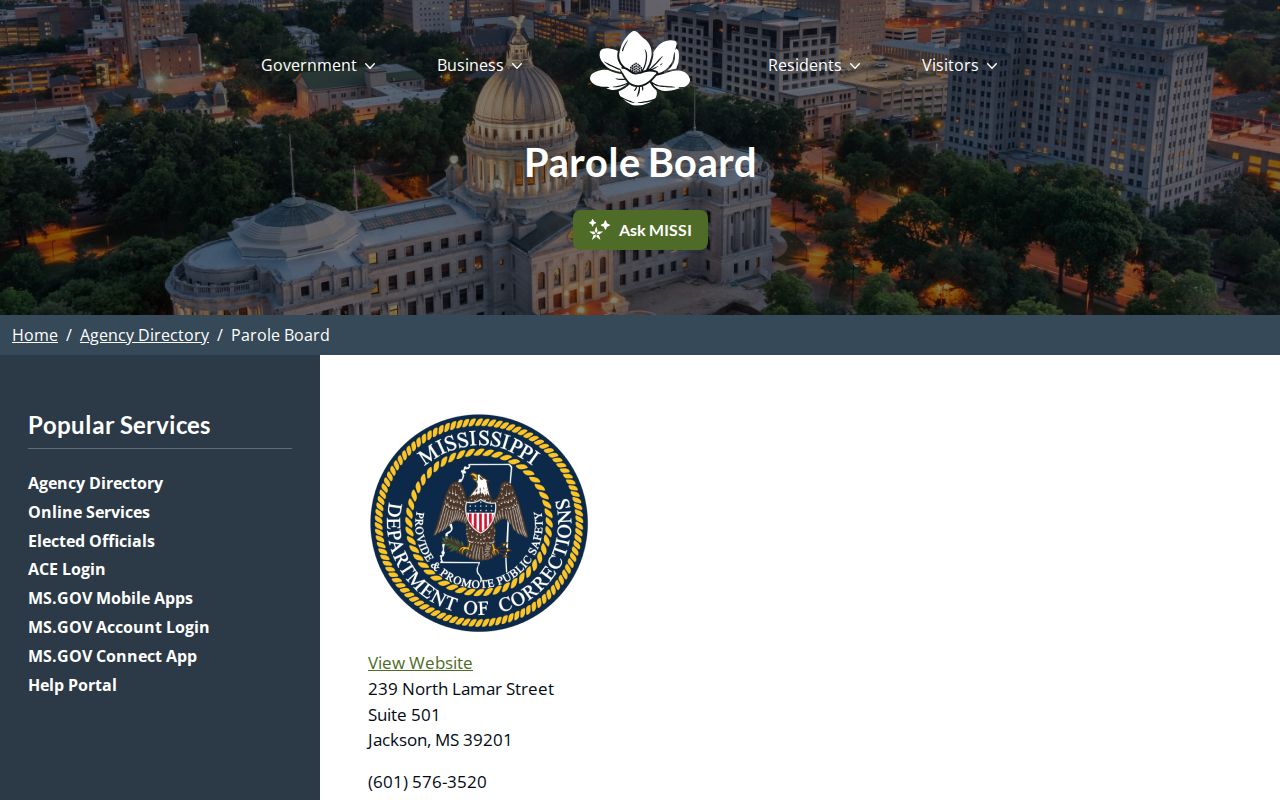
The directory is an agency contact page, not a public calendar or searchable list of Mississippi parole outcomes.
Mississippi State Parole Board239 North Lamar Street, Suite 501
Jackson, MS 39201
Phone: 601-576-3520
Find Mississippi Parole Hearing Dates
No verified public inmate-by-inmate Mississippi parole hearing calendar was available as of August 12, 2026. The published process is internal. MDOC states that cases are scheduled monthly, with enough time for the board to consider eligible people before their eligibility dates. MDOC sends the board a monthly list. That cadence does not mean the public can browse a monthly online calendar.
Rule 2.1 of the Mississippi Parole Board rules says hearings are closed to the public. When counsel has been arranged, staff gives that counsel the place, date, and time. The rules do not establish a general public hearing room or a person-level web search. Family members and other requesters should not assume they can attend or infer a date from a tentative release field.
- Confirm the person's full name, MDOC number, sentence, and institution through official MDOC records.
- Check whether a parole eligibility date is shown, while treating that date as eligibility rather than a scheduled hearing.
- Use notice received by the offender, arranged counsel, or an authorized victim contact as the primary case-specific date source.
- Contact the Parole Board for its available case information. Do not ask for a nonexistent public calendar search.
- Request nonexempt underlying records from MDOC when the date or status remains unclear.
The official MDOC detail example shows sentence and Tentative Release Date fields that can help identify a case.
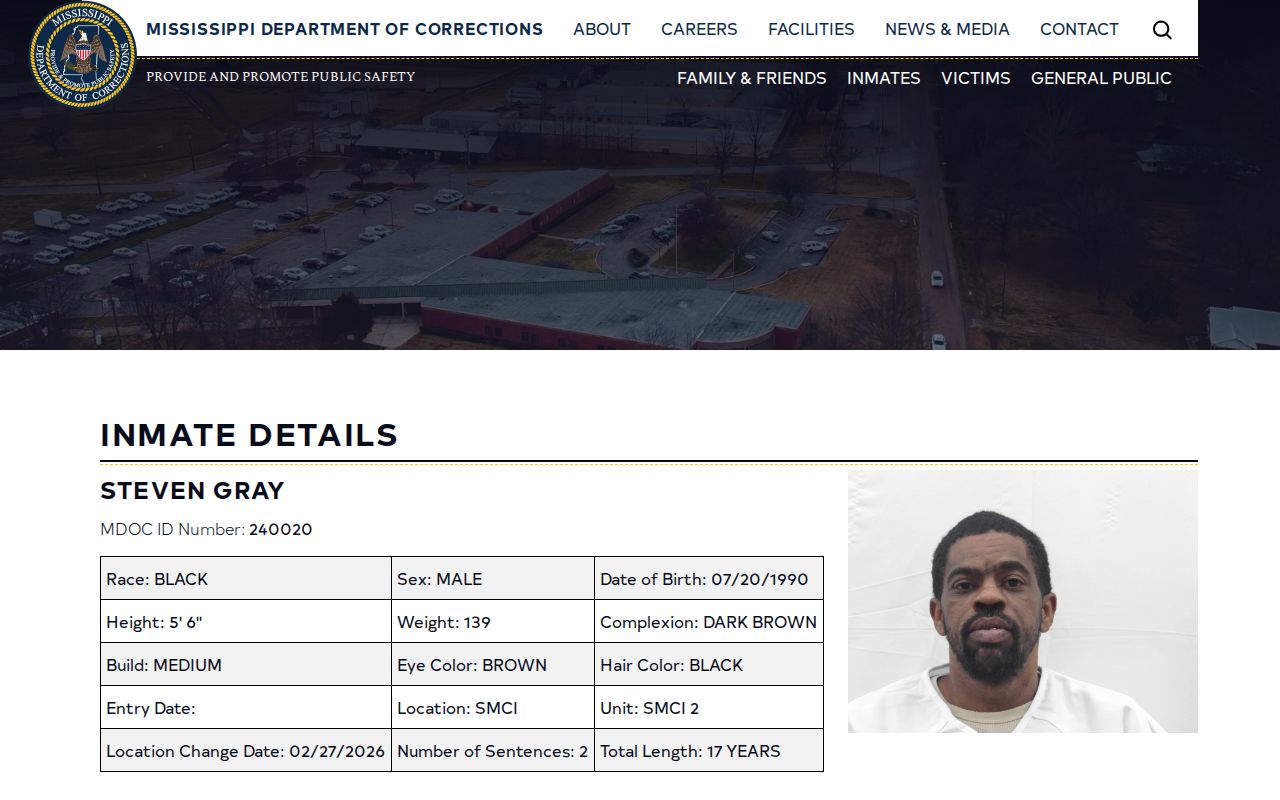
Those fields support identity checks, but none is a published Mississippi Parole Board hearing date.
Request Mississippi Parole Decisions
No official public Mississippi parole decisions search was verified. Rule 2.3 provides the decision to the offender and requires written notice to the victim or victim's family. Other requesters must state a reason, and disclosure is considered case by case. Information may be withheld when release could endanger someone, identify a confidential source, or harm a person's return to society.
The rules still create a formal agency record. Rule 2.4 requires the board to keep its official action and reasons in a minute book and notify the institution. Rule 2.6 routes requests for the underlying inmate record through MDOC. These provisions support a targeted request, but they do not promise instant access or establish that every part of a parole file is public.
- Ask the offender or an authorized recipient for the written decision when that route is available.
- Contact the Parole Board with the person's name and MDOC number and explain the reason for the request.
- Request the official action and reasons in a form that allows protected details to be withheld or redacted.
- Send requests for nonexempt inmate records through the MDOC public-records process.
- Verify a claimed grant with later MDOC custody or parole information. A grant and physical release can occur at different points.
The MDOC public-records portal is the official online route for a nonexempt records request.
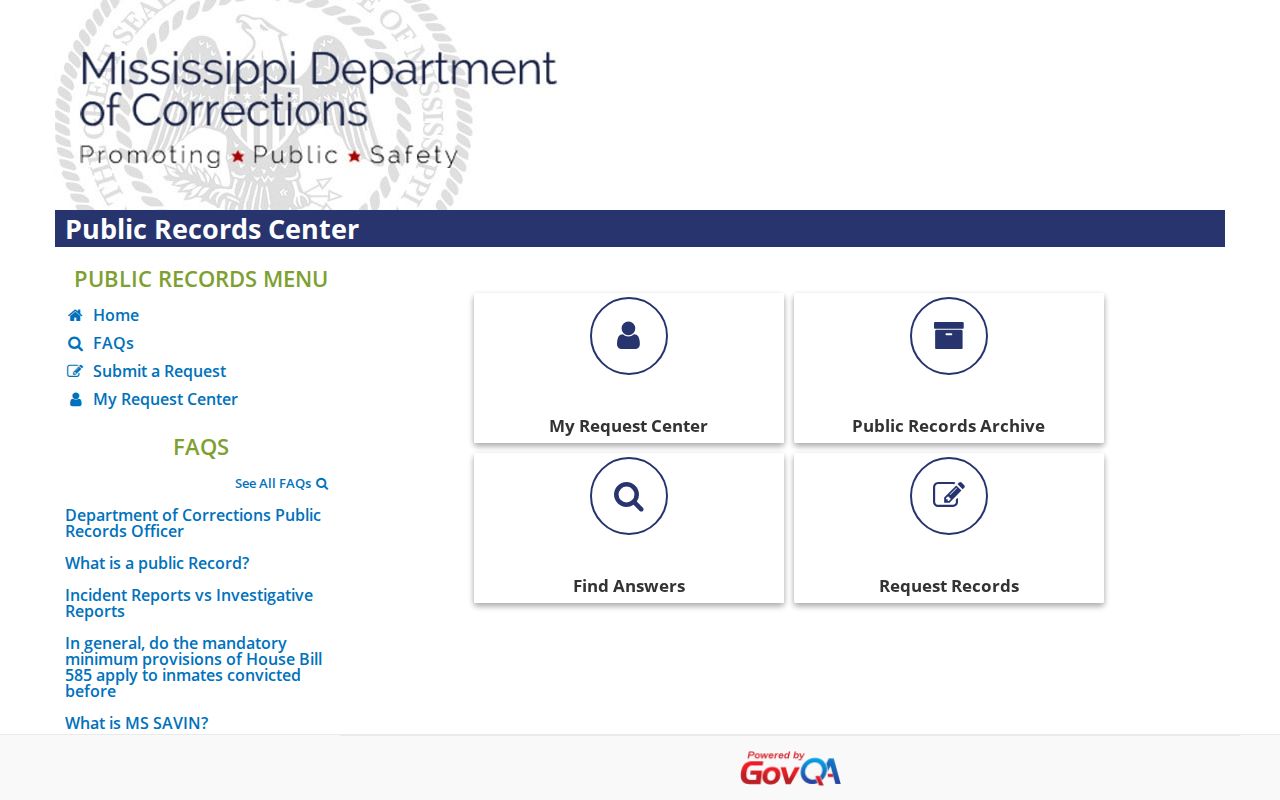
A precise request for the board action, reasons, or related inmate record is more useful than a broad demand for a full parole file.
MDOC's policy ordinarily requires a written request that identifies the records, includes contact information and a signature, and goes to its Public Records Officer. The agency says it responds within seven working days. If approved, it estimates cost and normally produces records within 14 working days after request and payment unless more time is needed. Statutory exemptions and protections still apply.
Mississippi Parole Hearing Outcomes
A board action must be read on its own terms. A grant authorizes conditional release subject to required steps and conditions. It does not prove the person walked out that day. A denial or refusal means parole was not approved at that review, while a later consideration date may be set where law and the rules permit. Revocation addresses parole already granted and can return a person to custody after a violation process.
| Action | What it means | What follows |
|---|---|---|
| Grant | The board approves conditional parole release | Release planning, conditions, and MDOC processing still apply |
| Denial or refusal | Parole is not approved at that review | Later review may be set when applicable |
| Further consideration | The matter needs later review or more information | The board sets or awaits the next procedural step |
| Revocation | Existing parole is withdrawn after the required process | The person may return to custody |
Terms such as “deferred,” “continued,” or “rescinded” should not be added to a Mississippi result unless the actual board record uses them. The verified rules identify official actions and reasons but do not supply a public result taxonomy for every possible label. After a grant, the MDOC Parolee Search may help confirm active supervision.
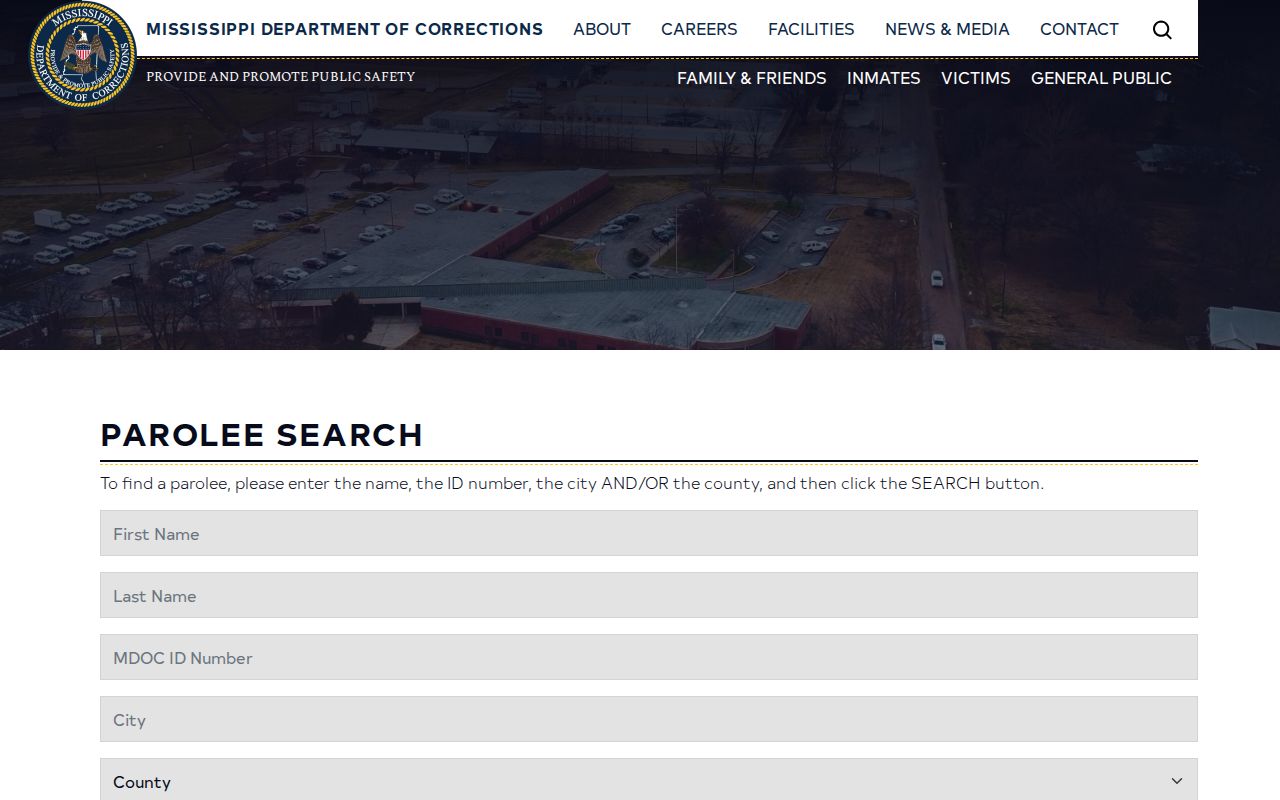
A parolee result can show the assigned county and officer, but it is not a substitute for the board's written decision.
Mississippi Parole Eligibility Rules
Mississippi parole eligibility principally turns on Miss. Code Ann. Section 47-7-3, read with Sections 47-7-3.1, 47-7-17, and 47-7-18. The offense, offense date, sentence, habitual-offender status, statutory exclusions, and required portion served can all matter. Current rules identify limits for habitual status and offense categories that include sex offenses, capital offenses, murder, trafficking, and statutes that expressly bar parole.
The 2021 Earned Parole Eligibility Act expanded eligibility for some Mississippi sentences, but it did not create automatic release. Earned time cannot reduce a parole-eligibility period that statute requires a person to serve. A public Tentative Release Date is also not a parole grant.
Section 47-7-18 permits initial-eligibility release without a hearing in some cases. Requirements include case-plan compliance, no victim hearing request, no serious or major violation report within the prior six months, agreement to conditions, and an approved discharge plan. A hearing is required when the criteria are not met, information is insufficient, or another law requires one.
- Eligibility
- The legal point when parole may be considered, not a promise of release.
- Grant
- The board's approval of conditional release on parole.
- Revocation
- A board action ending parole status after the required violation process.
- Discharge plan
- The approved release arrangement required in the initial-eligibility process described by statute.
The later reporting and supervision stage is covered in Mississippi Probation & Parole.
Closed Mississippi Parole Hearings
Mississippi's closed-hearing rule is a defining limit on public access. Rule 2.1 does not describe an open courtroom or a public attendance schedule. Staff may give arranged counsel the location and time, while victims use separate statutory and agency notice channels. A request for case information must account for those procedural roles and the protections around victim and confidential-source information.
The Mississippi Public Records Act also does not turn every parole file into an open record. Victim personal information, impact statements, and support letters held by MDOC or the board are protected. Other information can be withheld under the board rule when disclosure creates the listed safety, source, or return-to-society risk. A request should identify a specific official action while allowing lawful redaction.
The MDOC release and discharge information gives official context for the processing that follows an approved release.
Board approval is one step; MDOC processing and a confirmed custody change establish what happened next.
Mississippi Parole Records and Privacy
The Mississippi Public Records Act supplies a process for nonexempt agency records, not a right to every document in a parole file. Sections 25-61-1 through 25-61-19 govern executive-branch public records. Section 25-61-5 allows reasonable written procedures. A denial must be written and must identify the exemption on which the agency relies. Section 25-61-7 permits actual-cost charges for search, review, duplication, and mailing.
Parole material has added limits. Victim-identifying information, impact statements, and support letters held by MDOC or the board are protected. Board rules also permit withholding when disclosure could endanger a person, expose a confidential source, or harm return to society. MDOC lists probation and parole field-officer records among its limitations. Requesting the minute-book action and stated reasons, with protected details redacted, is more precise than demanding an entire case file.
| Record sought | First route | Access limit |
|---|---|---|
| Written decision | Offender, authorized victim channel, or Parole Board | Other disclosure is considered case by case |
| Official action and reasons | Parole Board minute-book request | Protected information may be withheld |
| Underlying inmate record | MDOC records request | Agency and statutory exemptions apply |
| Sentence or court order | Clerk for the sentencing court | Court rules and restricted-document policy apply |
MDOC normally responds to its public-record requests within seven working days. When approved, it estimates the charge and ordinarily produces the material within 14 working days after request and payment, unless more time is needed. Its standard mechanical-copy charge is $0.15 per page, with added actual costs possible for extended work, technology, or mailing. Those terms do not promise that exempt parole material will be released.
Monthly Mississippi Parole Case Scheduling
Mississippi's monthly case flow is often mistaken for a public schedule. MDOC prepares and sends a monthly list of eligible inmates so the board has time to act before eligibility. That is an internal exchange between agencies. It does not establish a web page where a member of the public can search by name, MDOC number, facility, or month.
This distinction changes the best search path. First identify the person and sentence through MDOC. Next use the offender's notice, arranged counsel, an authorized victim channel, or direct board contact for the case date. After action, seek the written decision or a case-specific, nonexempt record. Finally, check MDOC custody and parole records to see whether a grant led to release and supervision.
Never infer a decision from silence. A missing parolee result may mean release has not occurred, data has not yet appeared, the person is under another status, or the search did not match. Likewise, disappearance from an inmate search does not prove a grant. The MDOC Offender Search explains how custody, ERS, tentative dates, and records requests fit together.
Note: No public inmate-by-inmate calendar or public decisions search was verified, and closed hearings remain the published Mississippi rule.