
Mississippi Projected Versus Actual Release
MDOC’s public detail page calls the field Tentative Release Date. The agency guide defines it as the anticipated date after adjustments for earned time or credit for time served. It is a working computation. It does not say that the person left custody, and it does not bind MDOC to release on that day. The actual event depends on the sentence, lawful credits, institutional status, other holds, and final processing.
MDOC also computes parole dates, ERS dates, tentative release or discharge dates, and maximum release dates. Those labels answer different questions. A parole date concerns eligibility or board action. An ERS date concerns possible community placement while inmate status continues. Maximum discharge reflects the expected end without early-release allowances. Combining them into one “out date” loses the distinctions that Mississippi records preserve.
A pretrial detainee usually has no sentence-based date to compute. Bond, dismissal, a plea, a court order, or transfer may control the next event. A person serving a county sentence may have a locally computed date. Those cases route to the county jail and court, not the state offender search.
Find a Mississippi Release Date
The MDOC inmate search accepts an MDOC number or first and last name. The number gives the strongest match. A profile can show identity, Location, Unit, Location Change Date, sentence rows, and Tentative Release Date. Read all of them. A community location such as ERS can coexist with a future tentative date because the person remains under MDOC jurisdiction.
- Search by MDOC number when possible. If using a name, review every likely match.
- Confirm the photograph, state number, demographic details, and county of conviction.
- Open the record and find Tentative Release Date. Then read Location, Unit, and each sentence row.
- Check the parolee search if parole may apply. For unresolved time, jail credit, or eligibility, contact MDOC Records.
- For a county sentence or pretrial detention, ask the responsible jail and court because MDOC may not own the calculation.
The official MDOC search screen shows the number and name entry fields.
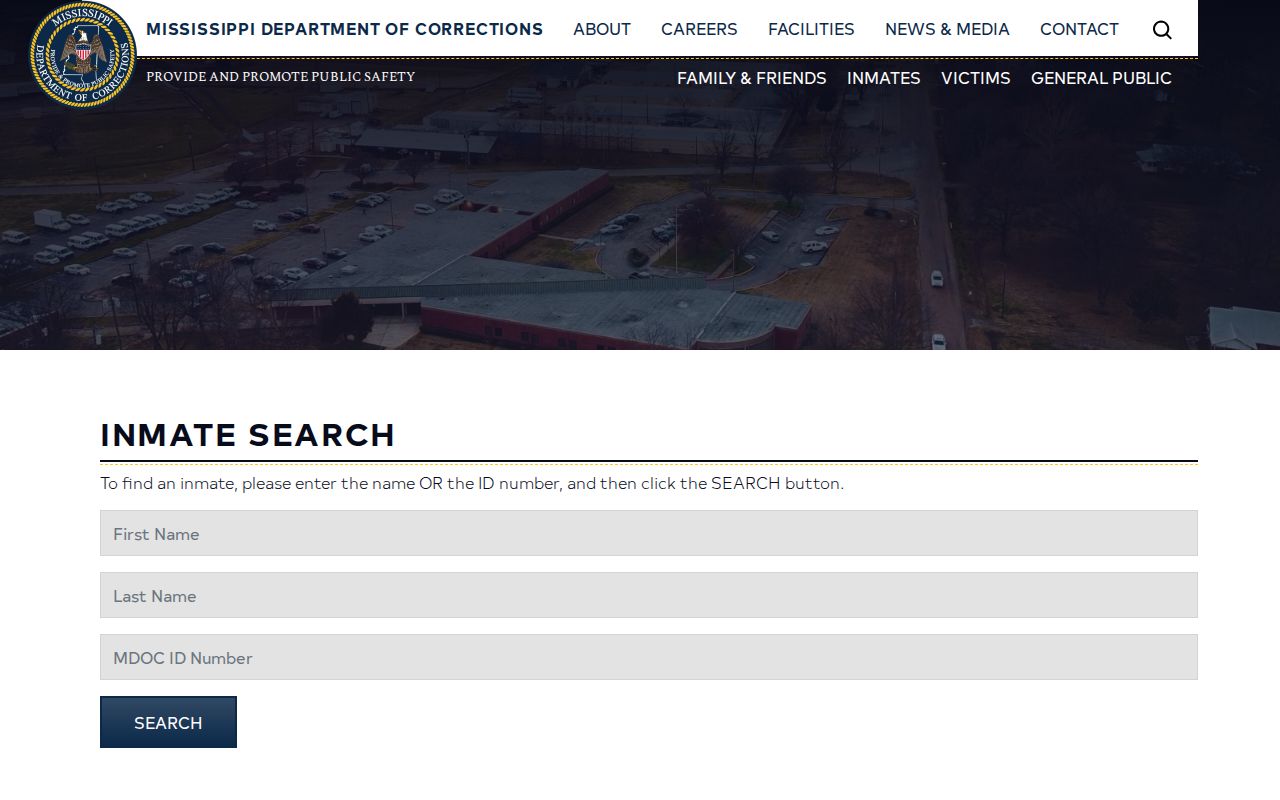
The form starts the lookup, while the detail record supplies the tentative date and placement context.
Note: A blank search result does not prove release, discharge, or the absence of another custody authority.
Read Mississippi MDOC Date Fields
The handbook and family guide describe a time sheet with more than one milestone. Sentence start, jail credit, concurrent or consecutive terms, offense date, sentence date, and legal exclusions can all shape the result. A concurrent term runs at the same time as another term, while a consecutive term begins after another term. Jail credit is time a court or records process applies toward the sentence.
| Date or term | What it means |
|---|---|
| Tentative Release Date | Anticipated release after current time and credit adjustments. |
| ERS date | Potential Earned Release Supervision point, subject to eligibility and review. |
| Parole date | Milestone tied to statutory parole eligibility or board action, not a grant. |
| Maximum discharge | Expected end without early-release allowances. |
| Location Change Date | Recorded placement change, not necessarily physical release. |
The official detail example displays the public Tentative Release Date beside the broader offender record.

The screenshot illustrates why the date must be read with the sentence and location information around it.
Mississippi Earned Time Under 47-5-138
Miss. Code Section 47-5-138 is central to Mississippi’s earned-time system. For an eligible sentence imposed after June 30, 1995, it permits 4.5 days of earned-time allowance for every 30 days served after MDOC finds compliance with good-conduct and performance requirements. The allowance is capped at 15 percent of the sentence.
This creates the familiar 85/15 illustration: an eligible person might serve 85 percent in a facility and the balance on ERS. It is not a rule for every inmate. Older sentences follow different law. Offense categories, habitual status, mandatory periods, life sentences, sex offenses, escape-related conduct, forfeiture, and other exclusions can change or bar the allowance. The offense and sentence dates matter.
| Part of calculation | Mississippi rule or limit |
|---|---|
| Rate | 4.5 days for each 30 days served for an eligible post-June 30, 1995 sentence. |
| Cap | Earned-time allowance cannot exceed 15 percent of the sentence under this provision. |
| Conduct | Compliance with conduct and performance rules is required; serious violations may cause forfeiture. |
| Placement | The balance may be served on ERS, which is supervision rather than discharge. |
| Exclusions | Sentence date, offense, habitual status, mandatory service, and other statutory bars must be checked. |
Historical truth-in-sentencing analysis helps explain the vocabulary, but it cannot replace current, offense-specific law. The older PEER discussion described ERS and tentative discharge concepts in a prior legal setting. Current calculations require MDOC’s present rules, Sections 47-5-138 through 47-5-140, applicable parole law, and the individual time sheet.
Mississippi ERS Requires More Than Time
An ERS date does not command release. Near eligibility, MDOC sends a letter and the inmate supplies a proposed Mississippi residence. A probation or parole agent checks the address and decides whether it is acceptable. Conduct, program work, offense severity, opposition, time served, and other record factors may affect review. The case manager’s time sheet is the source for the person’s ERS eligibility date.
Section 47-5-138 keeps the person in inmate status and under MDOC jurisdiction during ERS. Supervision works much like parole until the sentence expires. Serious rule violations can lead to forfeiture of earned time with the required approval. If ERS is revoked, the person may return to custody for the remainder, and time spent on ERS does not cut that remainder.
MDOC’s Types of Supervision page explains ERS and its community-custody status.

The official explanation confirms that early placement is supervised custody, not sentence discharge.
Why Mississippi Release Dates Change
A tentative date can move for several lawful reasons. Some changes are favorable, such as verified jail credit. Others delay or prevent the expected event. One profile may also contain several sentence rows with different terms, making a quick reading unreliable. Ask which sentence and which statutory regime control the date.
| Factor | Possible effect |
|---|---|
| Jail-time credit | A verified credit can change the computed time remaining. |
| Concurrent or consecutive terms | Sentence structure changes whether terms overlap or run one after another. |
| Earned-time forfeiture | Serious rule violations can remove an allowance and move the date later. |
| Detainer or hold | Another authority may take custody even when MDOC releases the person. |
| Court order | A later sentence, correction, revocation, or other order may change the legal basis. |
| Parole decision | Eligibility is not release; a grant, denial, or revocation affects the path. |
| ERS plan review | An unacceptable residence or incomplete plan can prevent release at eligibility. |
Mississippi’s Parole Board alone decides parole. Earned time cannot reduce a parole-eligibility period that law requires. The online date may therefore differ from the date on which the board can act, and neither date alone confirms the person’s departure from custody.
Mississippi Sentences Need Separate Checks
A date search begins by identifying who owns the custody. MDOC computes dates for state sentences in its system. A county jail may hold a person before trial, on a local sentence, for another county, or pending transfer. The sheriff and sentencing court control much of that local record. Federal and immigration custody have their own locators. A person can leave one facility on the tentative date and enter another authority’s custody without entering the community.
Multiple state sentences also need close reading. Concurrent terms overlap, while consecutive terms run one after another. An offense date can place one term under a different statute from another term. A mandatory period may block an allowance that applies elsewhere. The public detail rows help identify these issues, but they do not replace the official time sheet. Ask MDOC Records which sentence is controlling and whether all jail credit has been posted.
County and court records serve different roles. The jail can address booking, custody, and the local release event. The court can confirm the judgment, sentence, later amendment, probation, or revocation. Neither record should be forced to answer a question owned by MDOC. When the systems disagree, note each date and label, then ask the authority responsible for the sentence to explain the calculation.
Mississippi Discharge Certificate and Dates
MDOC says a discharge certificate is required before release processing is complete. That document creates an important difference between an online estimate and a finished agency event. The public offender search does not display the certificate. Its name also should not be stretched into proof that later parole or probation ended. The certificate belongs to the release process described by MDOC, while supervision status may require a separate check.
MDOC states that release processing may take 30 to 45 days. A case manager communicates the release date and checks travel plans. If bus travel is requested, MDOC may buy a ticket to an in-state destination or nearest city, but not out of state. These steps reinforce why the public Tentative Release Date should not be used as the sole basis for transport plans.
The MDOC release FAQ documents the certificate and case-manager process.

The source connects the computed date to the final checks that precede an actual MDOC release.
Confirm a Mississippi Release Date
For sentence time, jail credit, or eligibility, MDOC Records lists P.O. Box 24388, Jackson, MS 39225, 601-933-2889, and MDOCRecordsDepartment@mdoc.state.ms.us. Give the full name and MDOC number. Ask which date is being quoted, what sentence controls it, whether the figure is tentative, whether ERS or parole review is still pending, and whether another hold is recorded.
A written request can seek records sufficient to show the custody-release date, exit type, sentence-discharge status, final time computation, and any nonexempt discharge certificate. The MDOC records portal is the online request route. Protected information and statutory exemptions may limit what is produced.
The portal screen shows the official channel for a date question that the public profile cannot settle.
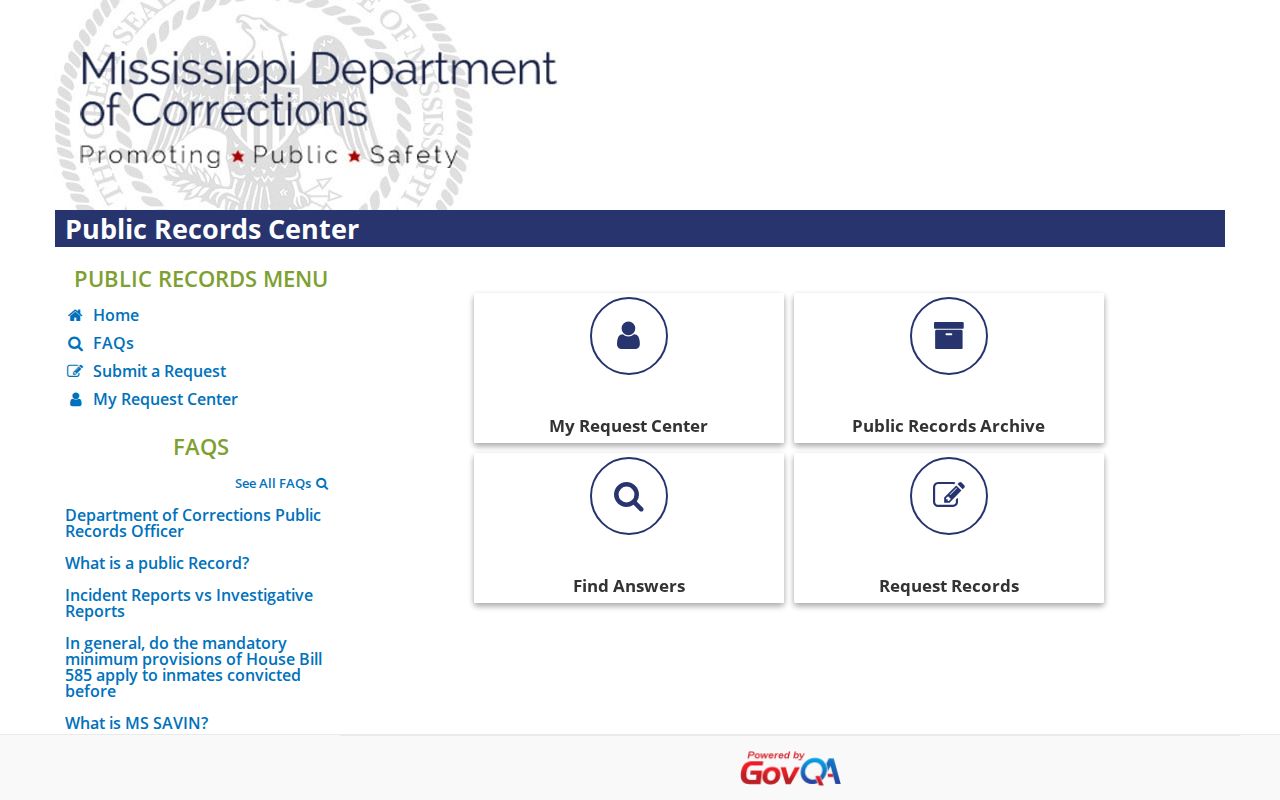
A submitted request documents the inquiry, while the responsive record supplies the agency’s answer.
For a county-held person, contact the jail records unit and sentencing court. The court can confirm the order, sentence, probation, or revocation, but may not document the exact day physical custody ended. A notification from Mississippi SAVIN or VINELink can confirm that a participating agency posted an event, yet it is not a historical discharge archive.
Final confirmation should identify the person by MDOC number and separate four questions: the projected institutional release, ERS eligibility, parole eligibility or decision, and maximum sentence discharge. A clear answer may require more than one office because MDOC calculates time, the Parole Board controls parole, the court owns its order, and another agency can hold the person after an MDOC release event.
Keep a copy of the detail record and note when it was viewed. Public fields can change as credits, discipline, court orders, or release-plan reviews enter the system. When MDOC gives a different date later, ask whether the earlier figure was tentative and what event changed the computation. That question is more useful than treating the first screen as a fixed promise.
Note: Always name the date being verified because parole, ERS, tentative release, and maximum discharge are not interchangeable.