
Mississippi Parole and Probation Compared
Parole is a conditional release from a prison sentence. The Mississippi State Parole Board decides whether to grant or revoke it, and eligibility does not guarantee release. Probation usually comes from a court order. It may follow a conviction without a prison term, or appear in a sentence that combines custody with supervision. MDOC field agents supervise both groups, but the legal source and the record trail differ.
House arrest is another status that can cause confusion. A Mississippi circuit court places a person on house arrest, while MDOC agents carry out supervision. MDOC does not grant that status. Earned Release Supervision, or ERS, differs again. A person on ERS may live outside a prison building but remains an inmate under MDOC jurisdiction through sentence expiration. Physical release is therefore not the same as full discharge.
| Status | Who authorizes it | Best first check | What ends it |
|---|---|---|---|
| Parole | Mississippi State Parole Board | MDOC Parolee Search | Discharge, sentence completion, or board action |
| Probation | Sentencing court | Assigned MDOC county office and court file | Court order or completed term |
| ERS | MDOC under state law | MDOC inmate search and supervision record | Sentence expiration or other lawful action |
| House arrest | Circuit court | Sentencing court and assigned MDOC office | Court order or completed term |
The official MDOC types of supervision page shows how community custody fits within the corrections system.
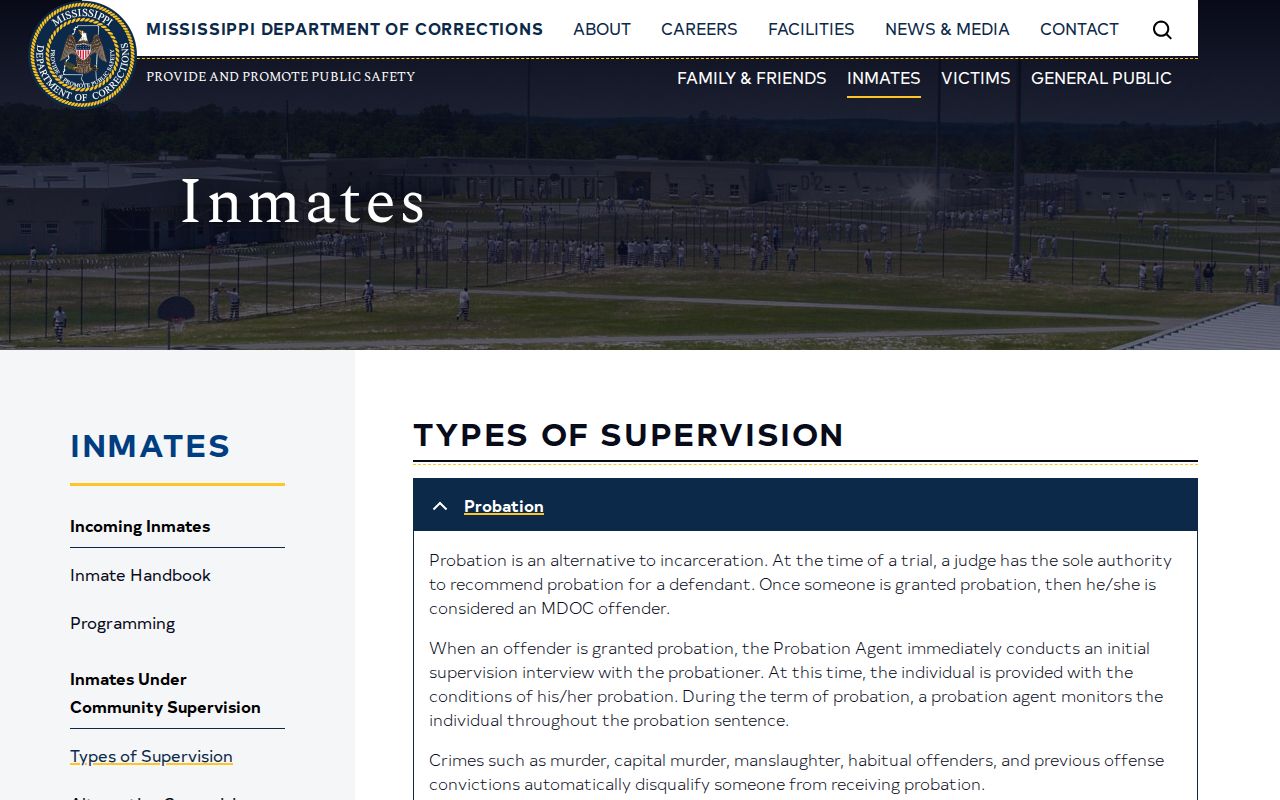
The source helps separate a move into community supervision from a completed Mississippi discharge.
- Parole
- Conditional release approved by the Parole Board before the prison sentence fully expires.
- Probation
- Court-ordered supervision that is not itself a parole grant.
- Discharge
- The formal end of the sentence or supervision status shown by the responsible authority.
- Flat Time Date
- A field in the parolee result that must be read with the current status, not treated alone as proof of discharge.
Verify Mississippi Post-Release Supervision
The strongest public statewide check is the MDOC Parolee Search. It accepts first name, last name, MDOC number, city, or county. A result may show the MDOC ID, photograph, birth date, assigned county, supervising officer, and Flat Time Date. Those fields can confirm an active parole record and point toward the office responsible for it. The MDOC number is the best match key when it is known.
Mississippi has no verified equivalent public statewide probationer locator. A blank parolee result does not prove that supervision ended. It can mean a spelling did not match, the person is on probation rather than parole, the status is ERS, the record falls outside the public tool, or the person has completed supervision. Use more than one channel before drawing a conclusion.
- Search the parolee tool by MDOC number, or use a full name and compare all returned identifiers.
- Read the assigned county, supervising officer, and Flat Time Date in context with the displayed record.
- If probation or house arrest is possible, contact the MDOC probation and parole office in the county of assignment.
- Check the sentencing court for the sentence, probation term, revocation, or later discharge-related order.
- Ask MDOC Records for nonexempt material when the online tools do not settle current or completed status.
The official parolee-search screen displays the statewide fields available for a person-level check.
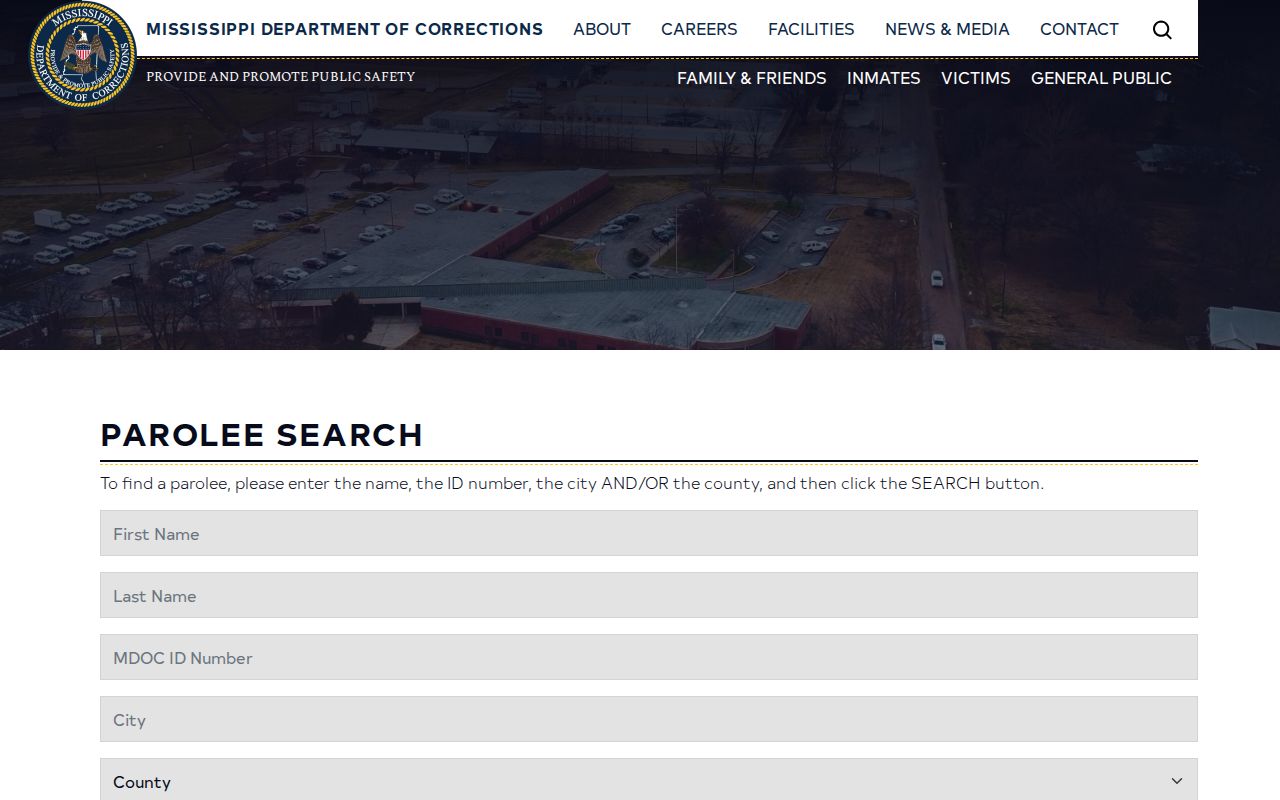
Its county and officer fields are useful for current parole, but they do not create a full history of Mississippi probation or completed discharge.
Mississippi Supervision Offices and Courts
County assignment matters after the statewide search. MDOC guidance directs a supervised person who needs the assigned agent to the probation and parole office in that county. An agent change request goes through the current agent's supervisor. The county of conviction and the county of supervision need not answer the same question, so record the county shown in the parolee result before making contact.
For probation and house arrest, the sentencing court supplies the controlling order. Mississippi Electronic Courts does not operate as one free, universal criminal index. Court and district participation varies, and some documents are restricted. Public access may require PAMEC registration. When the case is not online, the clerk that owns the case is the correct source. A court order can establish probation, revocation, or discharge-related action, but it may not state the exact day a person physically left custody.
The PAMEC public registration page is the official entry point for eligible Mississippi Electronic Courts access.
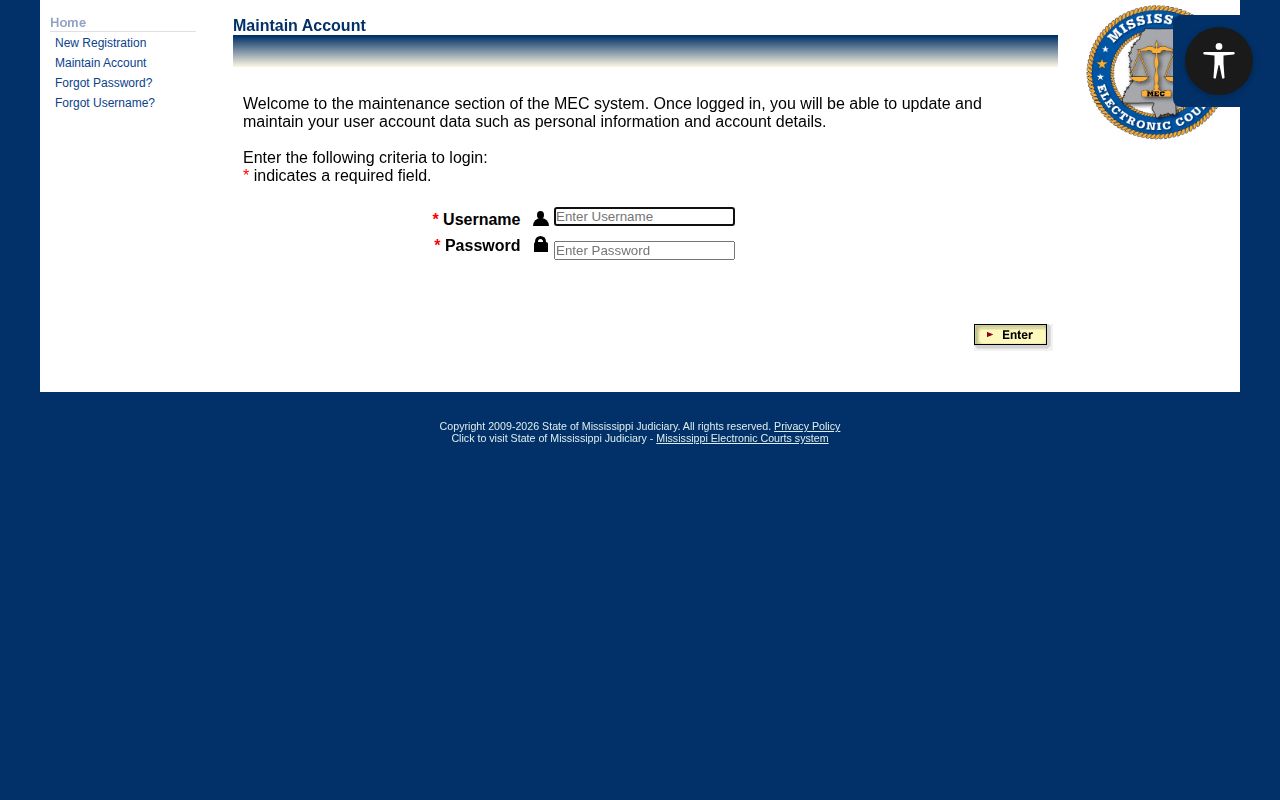
Use the court file to confirm judicial terms, then use MDOC for the field-supervision side of Mississippi probation and parole.
MDOC Records DepartmentP.O. Box 24388
Jackson, MS 39225
Phone: 601-933-2889
Email: MDOCRecordsDepartment@mdoc.state.ms.us
Mississippi ERS Is Not Discharge
An MDOC inmate-search record can show a location such as South Mississippi Earned Release Supervision while also showing a future Tentative Release Date. That combination is not an error. ERS places an eligible person in the community under terms set by law, but the person retains inmate status and remains under MDOC jurisdiction. If ERS is revoked, the person can return to custody to serve the balance.
The official South Mississippi ERS example demonstrates how this status appears in an MDOC result.
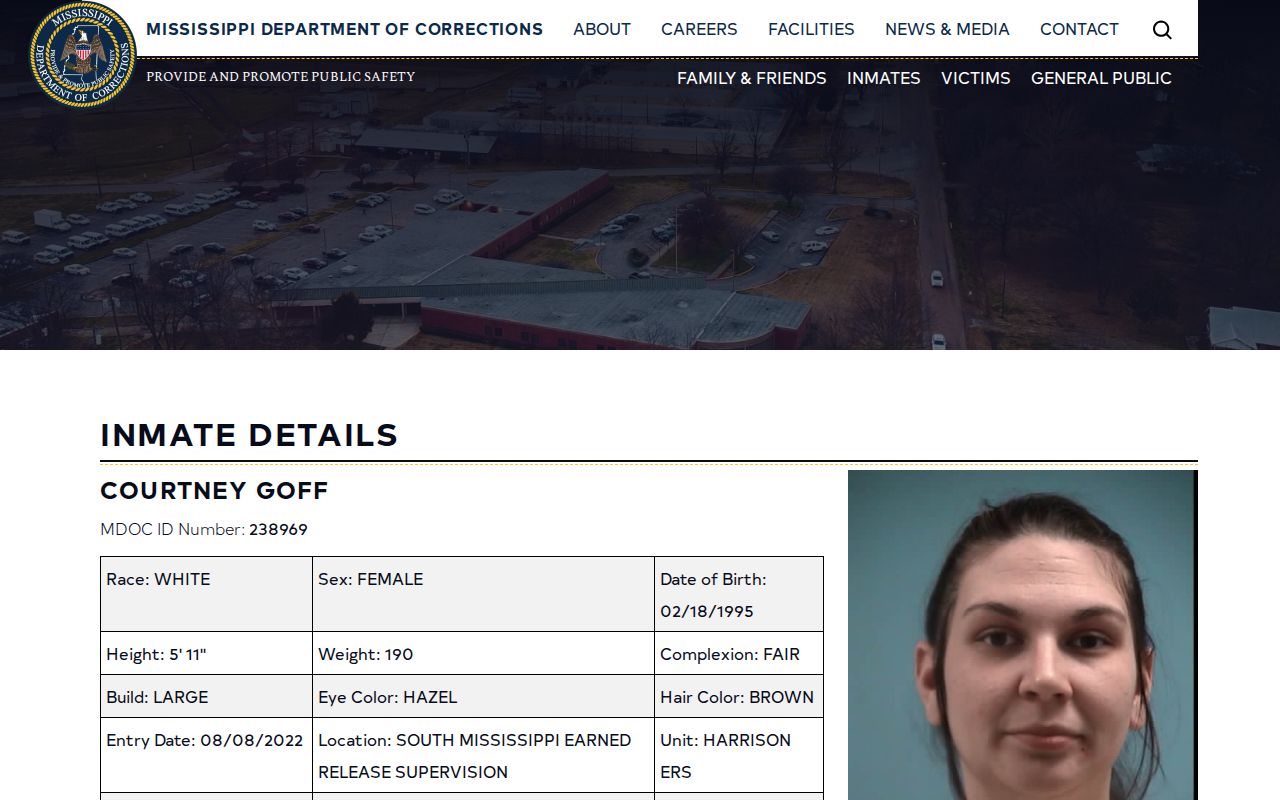
The displayed ERS location confirms release from a prison building, not discharge from the sentence or supervision.
For a statewide release check, compare the MDOC inmate search with the parolee search. Then ask Records about sentence time, jail credit, or discharge status if the two public views leave doubt. The broader Mississippi released-inmate search path also distinguishes county jail, state prison, federal, and immigration custody.
Note: A future tentative date beside an ERS location should be verified with MDOC before it is treated as a firm end date.
Mississippi Absconder Status Limits
An absconder is a supervised person whom the responsible authority reports as no longer complying with required contact or location terms. No official standalone statewide public absconder or parole-and-probation warrant list was verified in the research. That absence matters. A person who does not appear in a public list has not thereby been cleared of a warrant, violation, or return-to-custody action.
Mississippi SAVIN/VINE can send an Escape and Abscond Supervision notice and a Return to Custody notice when a participating agency updates its electronic record. It is a notification channel, not a warrant database. Coverage depends on the participating jail or state source, the agency update, and a correct registration. A missed or absent notice cannot decide legal status.
The Mississippi SAVIN notification page describes registration and the available event notices.
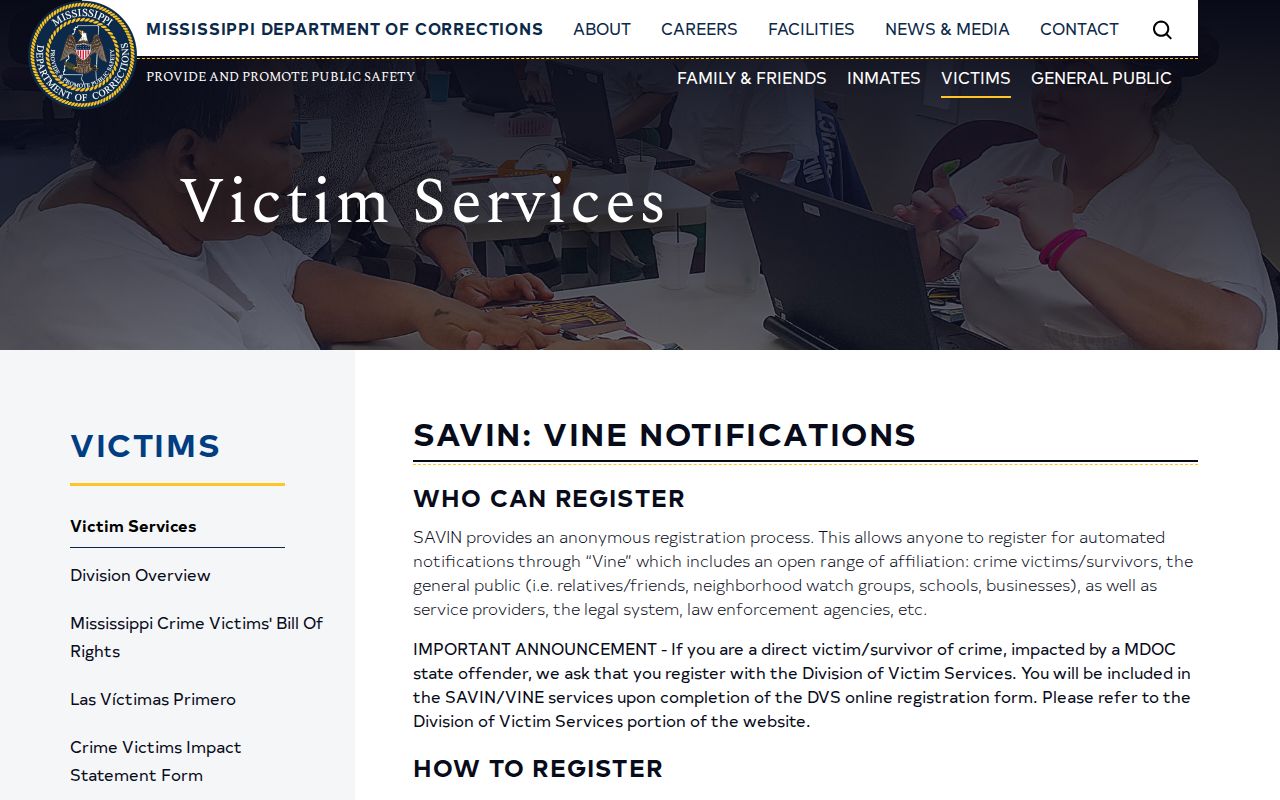
The service can flag a reported supervision event, while MDOC and the court remain the sources for the underlying Mississippi record.
How Mississippi Supervision Ends
Release and discharge answer different questions. Release can mean departure from a prison, transfer into parole, or placement on ERS. Discharge addresses the later end of the sentence or supervision authority. A Flat Time Date, tentative date, or old court entry should not be used alone to claim that Mississippi parole or probation has ended.
MDOC says a discharge certificate is required in its release process, yet the certificate is not displayed by the public offender search. The term also must not be stretched into proof that a later period of parole or probation ended. For nonexempt proof, request records sufficient to show the custody-release date, exit type, sentence-discharge status, and any available final time computation or certificate.
The MDOC release and discharge information explains the agency's certificate and release-processing framework.
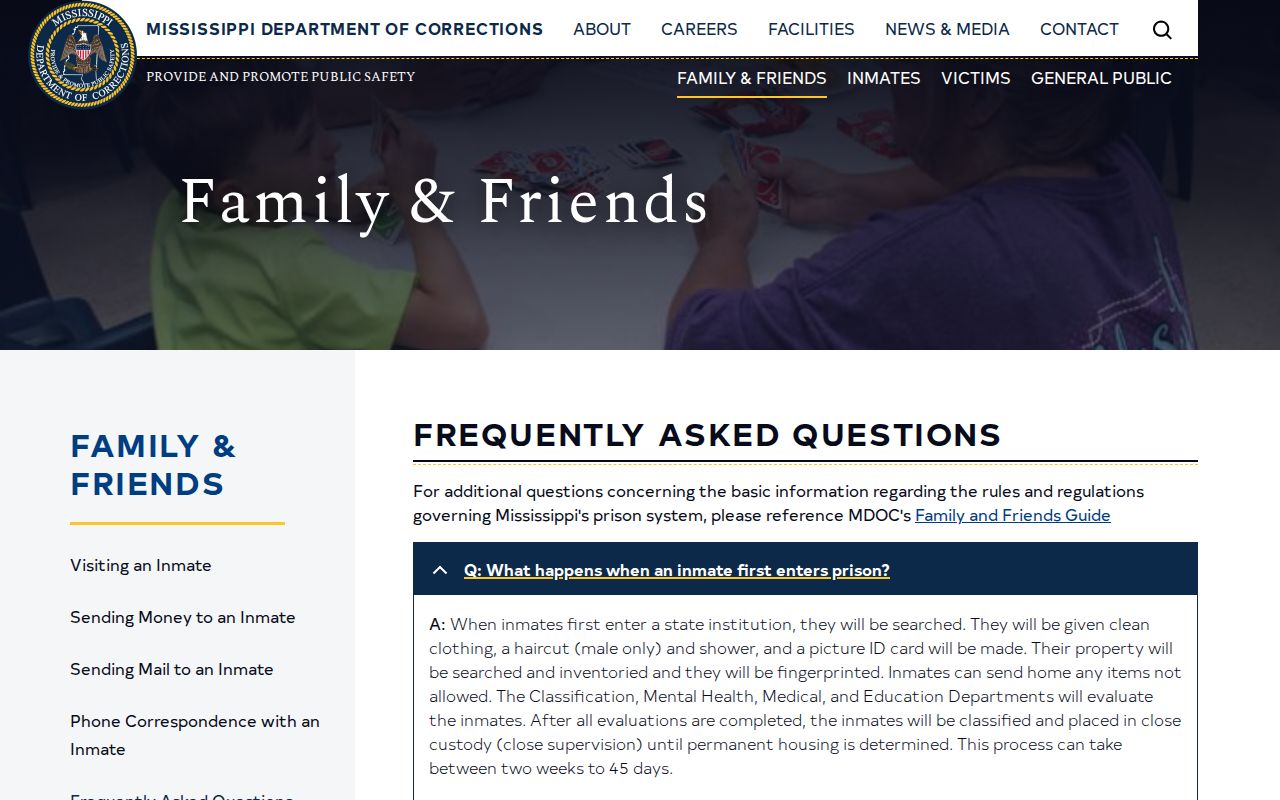
The certificate is part of agency processing, while a later supervision discharge may require a separate MDOC or court record.
Mississippi Supervision Records Requests
A formal request is useful when the public parolee tool does not answer whether supervision began, ended, or changed. The Mississippi Public Records Act covers nonexempt agency records, but it does not erase limits on probation and parole files. MDOC identifies parole and probation field-officer records among the material that may be restricted. Victim data, investigative information, protected personal material, and court-protected records can also be withheld. Ask for a narrow fact or document instead of every file connected to a person.
For sentence time and discharge, MDOC Records is the direct route. A request can identify the person by name and MDOC number and seek records sufficient to show the custody-release date, exit type, sentence-discharge status, and any nonexempt final time computation. For an agency record outside that unit, MDOC's Legal Division handles public-record requests. The written request ordinarily needs a clear description, the requester's contact information, and a signature.
| Question | Responsible source | Useful identifier |
|---|---|---|
| Is parole active? | Parolee search or assigned MDOC office | MDOC number and full name |
| Is probation active? | Assigned MDOC office and sentencing court | Case number, name, and county |
| Did the sentence discharge? | MDOC Records | MDOC number and sentence details |
| Did a court change probation? | Clerk for the sentencing court | Court case number |
MDOC says it responds to a public-record request within seven working days. If the request is approved, the agency estimates costs and ordinarily produces the record within 14 working days after the request and payment unless more time is required. Ordinary mechanical copies cost $0.15 per page. Search, review, redaction, vendor, and mailing charges may apply under the stated policy. These timelines and fees belong to the MDOC request process, not to a request made directly to a court clerk.
Under the state Act, a denial must be written and identify the relied-on exemption. Nonexempt parts should be separated when possible. A requester who disputes a denial may use the Mississippi Ethics Commission process under Section 25-61-13. Judicial records follow court rules and policy rather than the executive-branch procedure in exactly the same way.
Mississippi County Supervision Varies
Mississippi's statewide parolee search provides a common starting point, but probation verification becomes local. No matching public statewide probationer search was verified. The assigned MDOC county office and sentencing court must fill that gap. This county-to-county route is especially important when a person was confined in a regional facility serving more than one county or was sentenced in one county and supervised in another.
Local release feeds and detention patterns also differ. Several regional facilities serve multiple counties, while Attala County's local jail is closed and detention routes elsewhere. Those physical arrangements do not change which court ordered probation or which MDOC office carries supervision. Start with the status, then identify the authority and assigned county. The Mississippi County Directory routes to the local record source when a county release or court trail is needed.
Statewide figures show why this work matters. On August 3, 2026, MDOC reported 8,735 parolees, 34,328 probationers, 152 TVC parole cases, and 108 TVC probation cases, for 43,323 parolees and probationers combined. The inmate count was 21,823. From July 1 to August 3, the combined supervised count rose by 170 while the inmate count fell by 71. That is a one-month comparison, not a long-term trend.
Note: A county office can verify its assignment, but only the responsible board, court, or MDOC record can establish the controlling status.